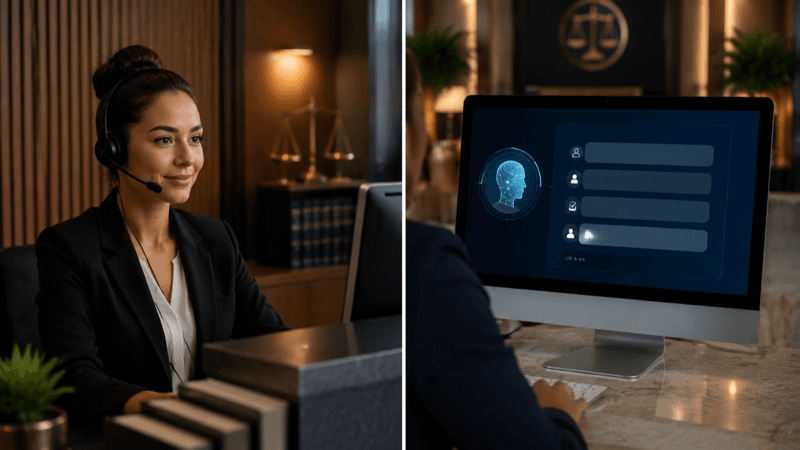
The question every managing partner asks when they first hear about AI reception: "Can it really replace our receptionist?" The honest answer is nuanced. In some areas, AI dramatically outperforms a human receptionist. In others, humans still have a clear edge. And in the best implementations, firms use both — each playing to their strengths.
Where AI Wins Decisively
Availability
This isn't close. AI answers every call, instantly, 24/7/365. No lunch breaks, no sick days, no vacations, no simultaneous-call bottlenecks. For a profession where clients often need help outside business hours — criminal arrests, accidents, domestic emergencies — around-the-clock availability is transformative.
Consistency
AI follows the same intake protocol on call #1 and call #1,000. It never has a bad day. It never rushes through intake because it's busy. It never forgets to ask the statute of limitations question or the conflict-check question. For compliance and quality control, this consistency is invaluable.
Cost
A full-time receptionist costs $55,000–$85,000/year when you include benefits and overhead. An AI receptionist typically costs $300–$800/month — and handles unlimited simultaneous calls. The math works strongly in AI's favor, especially for solo practitioners and small firms where receptionist salaries represent a significant percentage of overhead.
Data Capture
Every call is transcribed, every data point captured, every interaction logged and searchable. AI feeds intake data directly into Clio, MyCase, or your CRM — no manual entry, no missed details, no "I forgot to write that down."
Where Humans Still Excel
Emotional Intelligence
A skilled receptionist reads emotional cues that AI can miss. The trembling voice of a domestic violence victim, the confusion of an elderly client, the anger of someone who feels wronged — humans navigate these situations with empathy that AI approximates but doesn't fully replicate.
Complex Problem Solving
When a situation falls outside normal parameters — a caller with multiple overlapping legal issues, a client with a complicated scheduling constraint, a VIP referral who needs special handling — human judgment and creativity are still superior.
In-Person Presence
AI can't greet clients who walk into your office, offer them coffee, or create the welcoming first impression that sets the tone for the attorney-client relationship. If your firm sees significant walk-in traffic, a human presence at the front desk still matters.
The best-performing firms don't choose between AI and human reception. They use AI for intake, after-hours, and overflow — and let their human team focus on relationships, case coordination, and in-person client care.
The Hybrid Model
The firms seeing the best results use a hybrid approach. AI handles initial call answering, intake qualification, consultation scheduling, after-hours calls, and overflow during peak times. The human receptionist handles in-person visitors, complex situations that AI escalates, VIP client relationships, and tasks that require physical presence.
This model typically reduces front desk costs by 40–60% while improving call answer rates to 99%+ and increasing overall intake conversion by 30–40%. The human receptionist reports higher job satisfaction because they're handling meaningful interactions instead of repetitive phone intake all day.
Making the Decision
Start with your specific pain points. If missed calls and after-hours coverage are your biggest issues, AI alone may be sufficient. If you have heavy walk-in traffic and complex multi-practice intake needs, the hybrid model makes more sense. Either way, continuing to rely solely on a traditional receptionist model means accepting a 35% missed call rate — and the six-figure revenue loss that comes with it.